

Best Places to Go in Laos: 10 Destinations Worth Adding to Your Trip
Laos offers a different kind of Southeast Asian journey. Instead of beach resorts and large cities, travelers find Buddhist heritage, limestone mountains, river villages and coffee-growing highlands. Choosing the best places to go in Laos depends on how much time you have and whether you prefer culture, outdoor activities or quiet rural landscapes. The country is long, and travel between northern and southern regions requires careful planning. This guide AsianWay Travel introduces ten destinations with distinct experiences, helping you the right stops and build a realistic Laos itinerary.
10 Best Places to Go in Laos
The most effective Laos itinerary does not include every major destination. Choose a connected route and allow enough time to experience each place instead of spending most of the journey in transit.
.png)
1. Luang Prabang
Luang Prabang is the best place to begin if you want to understand Laos through its temples, traditional neighborhoods and riverside life. The historic town combines Lao wooden houses, Buddhist monasteries and European-influenced buildings within a compact area that is easy to explore on foot.
Start early at the morning market, where vendors arrange herbs, river fish, mushrooms and seasonal fruit beside narrow streets. Continue to Wat Xieng Thong, one of the city’s most significant temples, before walking along the Mekong waterfront.
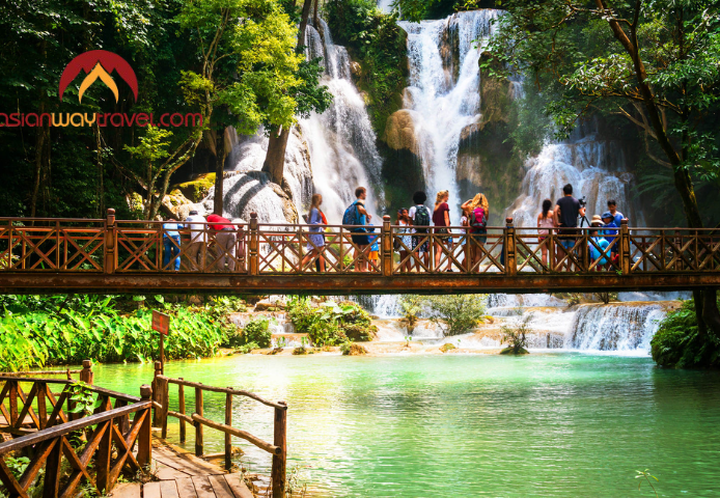
Beyond the center, Kuang Si Falls offers forest trails and tiered turquoise pools. A boat trip on the Mekong can also include the Pak Ou Caves and small riverside communities.
Best for: Culture, heritage, food and slow travel
Recommended stay: 3–4 days
.png)
2. Vang Vieng
Vang Vieng is known for limestone mountains rising directly behind rice fields and the Nam Song River. Its main attraction is not the town itself but the surrounding landscape, which is easier to explore than many remote mountain areas in Laos.
Travelers can kayak along the river, enter limestone caves, swim at the Blue Lagoons or climb viewpoints overlooking the valley. The paths can be steep, but sunrise and sunset views reveal layers of dark karst peaks above green farmland.
Vang Vieng also works well for travelers who want outdoor activities without committing to a multi-day trek. Its position between Luang Prabang and Vientiane makes it practical for a first Laos journey.
Best for: Kayaking, viewpoints, caves and active travel
Recommended stay: 2–3 days
.png)
See more: Bangkok or Chiang Mai: Which Thai City Should You Visit First?
3. Vientiane
Vientiane is quieter and more manageable than most Southeast Asian capitals. It does not require a long stay, but it provides useful context about Lao history, religion and modern urban life.
Key landmarks include Pha That Luang, the country’s most important national monument, and Patuxai, a large arch overlooking central Vientiane. Wat Sisaket stands out for its covered galleries filled with Buddha images, while the COPE Visitor Centre explains the continuing effects of unexploded ordnance.
In the evening, walk beside the Mekong as food stalls begin serving grilled meat, papaya salad and local snacks. Vientiane is best treated as a cultural stop rather than a destination packed with attractions.
Best for: Temples, history and a short city stay
Recommended stay: 1–2 days
.png)
4. Nong Khiaw
Nong Khiaw offers some of northern Laos’s most accessible mountain scenery. The village sits beside the Nam Ou River, with steep limestone peaks rising behind houses, gardens and small guesthouses.
The main activity is hiking to viewpoints above the valley. Trails climb through forested slopes before opening onto wide views of the river winding between mountains. Morning mist often covers the lower valley before lifting the peaks.
Boat trips and village walks provide quieter alternatives to hiking. Compared with Vang Vieng, Nong Khiaw has fewer organized attractions and a slower atmosphere, making it better for travelers who want scenery without busy nightlife.
Best for: Mountain views, hiking and quiet stays
Recommended stay: 2–3 days
.png)
5. Muang Ngoi
Muang Ngoi is a small riverside settlement reached by boat Nong Khiaw. Its limited road access has helped preserve a slower village environment where walking remains the main way to explore.
Paths lead the riverbank toward caves, rice fields and nearby communities. Along the way, travelers pass grazing buffalo, vegetable gardens and wooden homes rather than souvenir streets or large hotels.
There are fewer scheduled activities here, which is part of the appeal. Muang Ngoi suits travelers who enjoy unstructured days, simple accommodation and short walks through the countryside. It is less suitable for visitors who need extensive services or a tightly organized schedule.
Best for: Rural scenery, village walks and digital breaks
Recommended stay: 1–2 days
.png)
See more: Lao Tour
6. Plain of Jars
The Plain of Jars near Phonsavan is one of Laos’s most unusual archaeological landscapes. Large stone vessels are scattered across open fields and hills, creating a site that feels very different the country’s temple towns and river destinations.
Researchers associate the jars with Iron Age funerary practices, although many questions about their construction and use remain. Visitors can explore designated sites where cleared paths lead between groups of jars, craters and information panels.
The surrounding province also carries visible evidence of wartime bombing. Learning about this history gives the visit more meaning than simply photographing the stone structures. Follow marked paths because unexploded ordnance remains a concern outside cleared areas.
Best for: Archaeology, history and less conventional destinations
Recommended stay: 1–2 days
.png)
7. Thakhek
Thakhek is the starting point for the Thakhek Loop, a road journey through the limestone landscape of Khammouane Province. The route passes caves, villages, reservoirs and mountain roads, offering more independence than a standard guided sightseeing program.
Kong Lor Cave is the main highlight. Visitors travel by small boat through a long underground river passage, where engine sounds echo between high limestone walls before the boat emerges daylight on the other side.
Completing the loop usually takes several days and requires confidence on rural roads. Travelers who do not want to ride a motorbike can arrange a private vehicle and driver, which provides the same landscape experience with fewer logistical concerns.
Best for: Road trips, caves and independent exploration
Recommended stay: 3–4 days
.png)
8. Pakse
Pakse is the main transport and travel base for southern Laos. The city itself is less atmospheric than Luang Prabang, but its location makes it useful for reaching the Bolaven Plateau, Wat Phou and Si Phan Don.
Spend time at local markets, visit nearby temples or cross the Mekong for views over the city. Pakse also offers a broader range of hotels, transport services and restaurants than smaller destinations in the south.
Rather than planning a long city stay, use Pakse to organize the next stage of the journey. It is especially practical for travelers arriving by air or continuing toward Cambodia, Champasak and the Mekong islands.
Best for: Southern Laos connections and short stopovers
Recommended stay: 1–2 days
.png)
9. Bolaven Plateau
The Bolaven Plateau has cooler temperatures, coffee plantations and some of southern Laos’s most impressive waterfalls. It provides a clear contrast to the dry lowlands around Pakse.
Tad Fane drops through a forested gorge in two narrow streams, while Tad Yuang allows visitors to approach the upper and lower sections of the falls. The sound of falling water carries through the forest before the viewpoints come view.
Coffee farms are another important part of the region. Visiting a plantation explains how altitude, volcanic soil and local production methods shape Lao coffee. The plateau can be explored on a day trip, but an overnight stay allows more time for smaller villages and less-visited waterfalls.
Best for: Waterfalls, coffee and scenic road journeys
Recommended stay: 2 days
.png)
10. Si Phan Don
Si Phan Don, also called the Four Thousand Islands, is where the Mekong spreads across a broad section of southern Laos near Cambodia. The area is best known for Don Det, Don Khon and the larger Don Khong.
Days here follow the river rather than a fixed sightseeing schedule. Travelers cycle along narrow island paths, pass rice fields and watch fishing boats move through the channels. On Don Khon, former railway structures provide evidence of French colonial attempts to bypass the Mekong’s waterfalls.
Li Phi Falls and Khone Phapheng show the river at its most powerful. In contrast, evenings are quiet, with sunset light stretching across the water simple riverside restaurants.
Best for: Cycling, river landscapes and relaxation
Recommended stay: 2–3 days
.png)
Suggested Routes for 7, 10 and 14 Days
A practical route reduces long transfers and allows at least two nights in destinations with substantial activities.
|
Trip length |
Suggested route |
|
7 days |
Luang Prabang – Vang Vieng – Vientiane |
|
10 days |
Luang Prabang – Nong Khiaw – Vang Vieng – Vientiane |
|
14 days |
Luang Prabang – Vang Vieng – Vientiane – Pakse – Bolaven Plateau – Si Phan Don |
The 7-day route covers the country’s most accessible cultural and natural highlights. Ten days gives you time to add the quieter mountain scenery of Nong Khiaw. For a 14-day trip, flying between Vientiane and Pakse can make the north-to-south itinerary more comfortable.
.png)
Best Time to Visit Laos
November to February is generally the most comfortable period for visiting the best places to go in Laos. Days are usually drier, temperatures are more manageable and road conditions are better for regional journeys.
March and April are hotter, particularly in the south. Smoke seasonal agricultural burning may also affect visibility in some northern areas. May to October, rain creates greener landscapes and stronger waterfalls, but rural roads and outdoor plans can be disrupted.
Travel conditions vary by region, so check local forecasts and transport schedules before finalizing mountain drives, boat journeys or trekking activities.
.png)
Plan Your Laos Journey with Asianway Travel
The best Laos trip balances major landmarks with enough time to experience local life, mountain scenery and the Mekong. Trying to include too many distant places often results in long transfers and short visits.
With more than 20 years of regional experience, Asianway Travel can design a private Laos itinerary around your travel dates, interests and preferred pace. Our local specialists can connect the right destinations, arrange practical transfers and recommend experiences that fit your route. Contact Asianway Travel to start planning a Laos journey built around how you want to travel.