
15 Famous Landmarks in Bangkok, Thailand You Should Not Miss
Bangkok brings royal palaces, Buddhist temples, historic neighborhoods and modern skyscrapers one busy capital. For first-time visitors, choosing the right stops can be difficult because the main attractions are spread across several districts. This guide Asianway Travel introduces 15 famous landmarks in Thailand, Bangkok, with practical advice on what to see, when to visit and how to combine nearby places. Use it to build a balanced itinerary covering Bangkok’s history, local culture, river life and contemporary cityscape without spending too much time moving between locations.
15 Famous Landmarks in Bangkok, Thailand
The following Bangkok landmarks include royal sites, temples, museums, markets and modern viewpoints. Each destination offers a clear reason to visit and can fit a practical one-day or two-day city itinerary.
1. The Grand Palace and Wat Phra Kaew
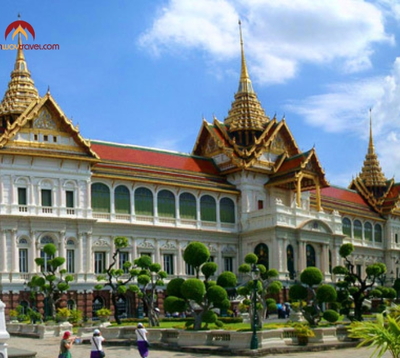
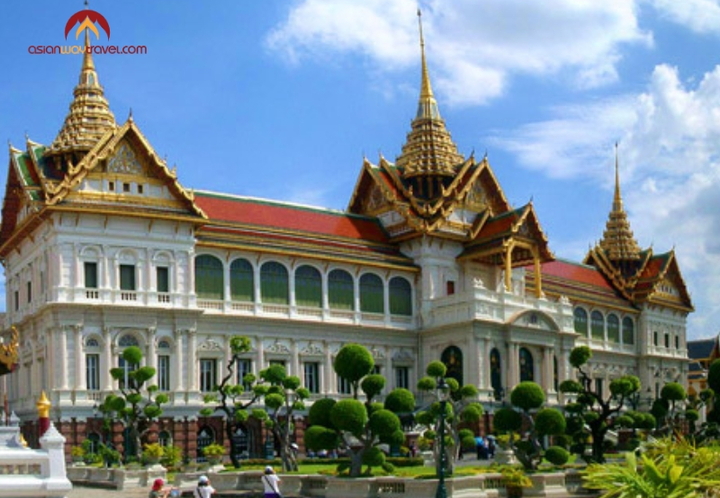
The Grand Palace is one of the most important historical landmarks in Bangkok. The complex served as the official residence of Thai kings and remains closely connected to royal ceremonies.
Inside the grounds, Wat Phra Kaew houses the Emerald Buddha, one of Thailand’s most respected religious images. Visitors can also see ceremonial halls, detailed murals, gilded structures and traditional Thai architectural elements.
Arrive early to avoid the largest crowds. Shoulders and knees must be covered, and visitors should wear respectful clothing suitable for a royal and religious site.
2. Wat Pho
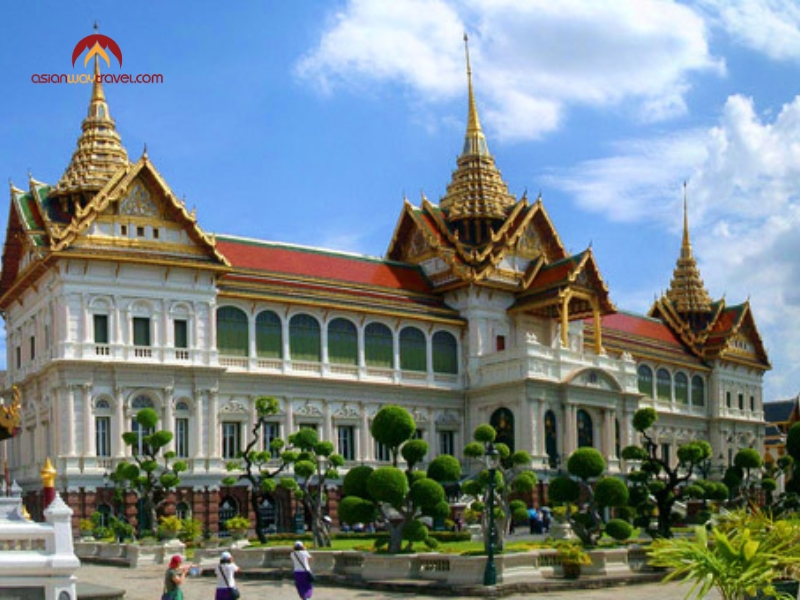
Located near the Grand Palace, Wat Pho is best known for its large Reclining Buddha covered in gold leaf. The statue is the main attraction, but the wider temple complex is also worth exploring.
The grounds contain decorated stupas, courtyards, murals and inscriptions connected to traditional Thai knowledge. Wat Pho is also associated with the development and teaching of Thai massage.
Allow at least one hour for the visit. Because the temple is within walking distance of the Grand Palace, both landmarks can be included in the same morning.
3. Wat Arun
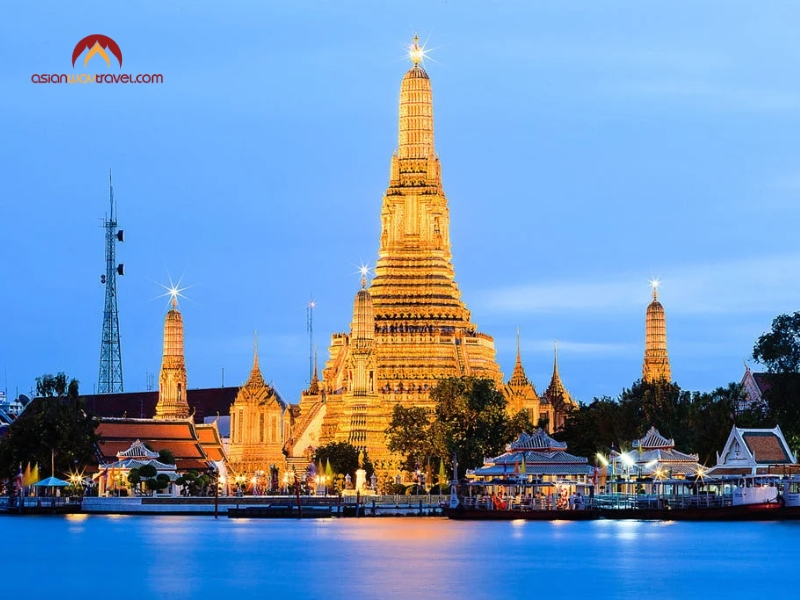
Wat Arun stands on the western bank of the Chao Phraya River and is one of Bangkok’s most recognizable temples. Its central tower is decorated with porcelain and ceramic pieces that create intricate patterns.
Visitors can reach the temple by taking a short ferry across the river the Wat Pho area. The riverside setting also makes Wat Arun an excellent photography stop.
Visit in the late afternoon for softer light, or view the temple the opposite riverbank around sunset. The exterior is especially striking when illuminated in the evening.
4. The Chao Phraya River
The Chao Phraya River is both a major Bangkok landmark and a practical transport route. Traveling by boat provides direct access to temples, markets, hotels and historic riverside districts.
Public ferries are affordable and useful for short transfers. Private long-tail boats offer more flexible routes through smaller canals, while dinner cruises focus on evening views and entertainment.
A river journey is suitable for travelers who want to see Bangkok a different perspective while avoiding some of the city’s road traffic.
See more: Top Tour Operators in Bangkok Trusted by International Travelers in 2026
5. The Golden Mount at Wat Saket
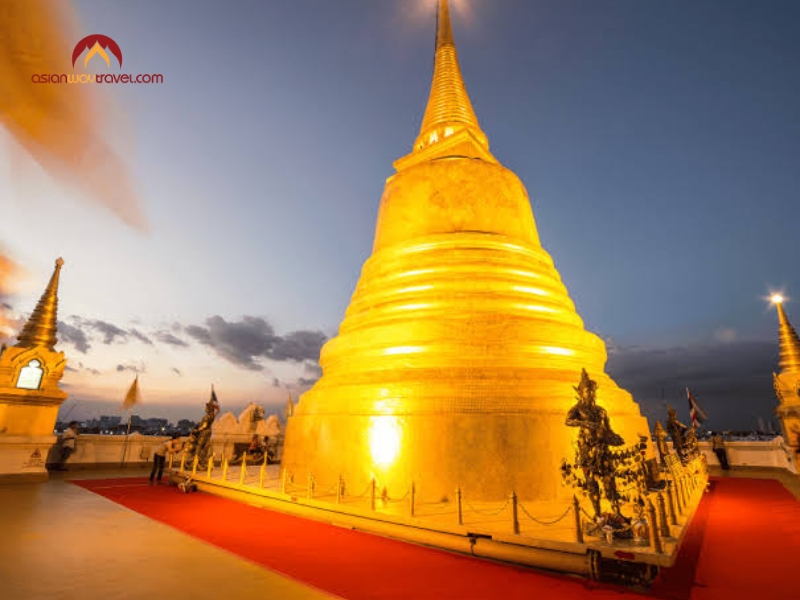
The Golden Mount is an artificial hill topped by a golden chedi at Wat Saket. Visitors reach the summit by following a staircase that gradually circles the hill.
The top provides wide views over Bangkok’s old town, including temple roofs and modern buildings in the distance. The route is not difficult, but the heat can make the climb uncomfortable around midday.
Visit early in the morning or later in the afternoon. The Golden Mount can also be combined with nearby Loha Prasat.
6. Wat Ratchanatdaram and Loha Prasat
Wat Ratchanatdaram is known for Loha Prasat, a multi-level structure topped with metal spires. Its geometric design differs the decoration seen at many other Bangkok temples.
Visitors can explore the interior passages and learn about Buddhist principles presented throughout the building. The upper levels also offer views of the surrounding old town.
This site is less crowded than the Grand Palace and works well for travelers interested in architecture, photography and quieter cultural attractions.
7. The Giant Swing and Wat Suthat
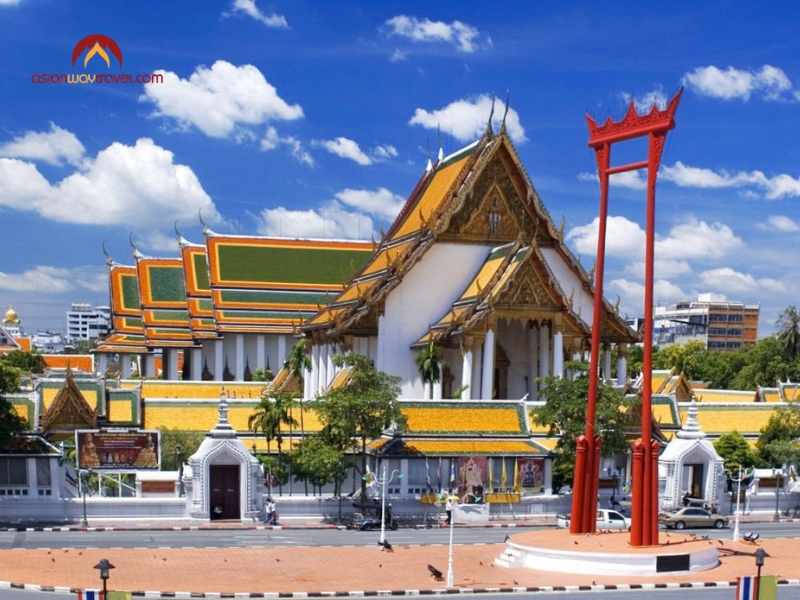
The Giant Swing is a tall red structure located in front of Wat Suthat. It was originally used in an important Brahmin ceremony and remains a recognizable symbol of Bangkok’s old town.
Wat Suthat is valued for its large Buddha image, wall paintings and spacious temple interior. It usually receives fewer visitors than Wat Pho or Wat Arun.
The Giant Swing is mainly a short photography stop, but pairing it with Wat Suthat creates a more complete cultural visit.
8. Bangkok National Museum
The Bangkok National Museum helps visitors understand Thai history, religious art and royal culture before exploring the city’s temples and palaces.
Its collections include Buddha images, traditional weapons, ceremonial objects, sculptures, textiles and items connected to Thailand’s royal courts. The museum is particularly useful for travelers who want more historical context.
Allow around two hours for a focused visit. It can be combined with the Grand Palace area, although museum enthusiasts may prefer a longer stay.
9. Democracy Monument
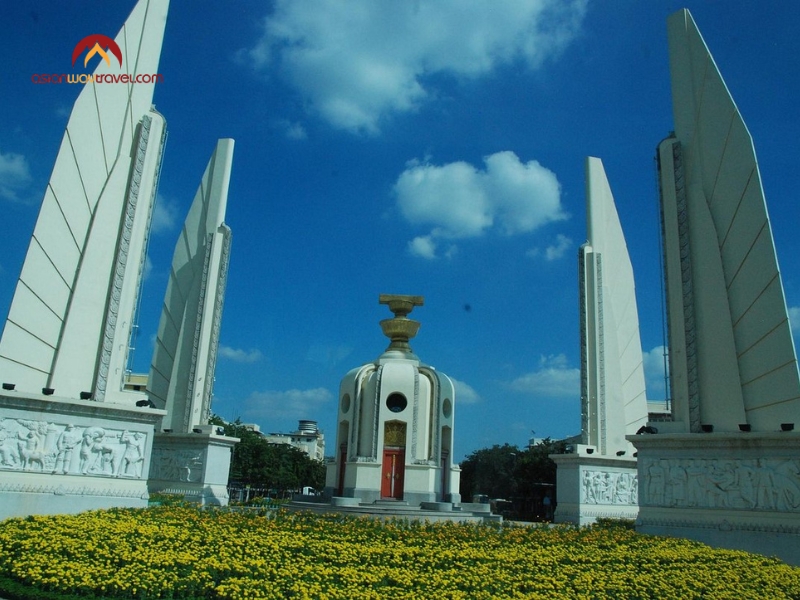
Democracy Monument stands on Ratchadamnoen Avenue and marks an important period in Thailand’s modern political history. Its central structure is surrounded by four large wing-shaped elements.
Most visitors view the monument the surrounding sidewalks because it is located within a busy traffic circle. The wider avenue also features government buildings and formal urban architecture.
This is a brief stop rather than a major attraction, but it adds modern historical context to an old-town walking or driving route.
10. Yaowarat Road in Bangkok Chinatown
Yaowarat Road is the center of Bangkok’s Chinatown and one of the city’s most active cultural districts. Gold shops, Chinese temples, traditional businesses and food stalls line the surrounding streets.
The area becomes especially lively in the evening, when street vendors serve seafood, noodles, desserts and Chinese-Thai dishes. Small alleys also lead to markets and long-established family businesses.
Visit on foot and expect heavy crowds during dinner hours. Chinatown is best suited to food travelers, photographers and visitors interested in local urban life.
11. Wat Traimit and the Golden Buddha
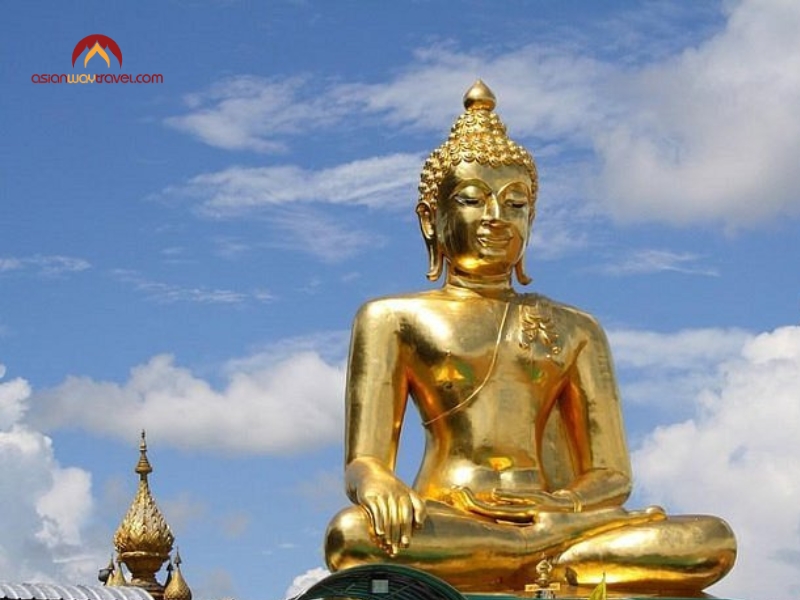
Wat Traimit is located near the entrance to Chinatown and houses a large solid-gold Buddha image. The temple museum explains the statue’s history and how its true material was discovered.
The site is smaller and easier to visit than the Grand Palace complex. It can be included before walking toward Yaowarat Road and the surrounding markets.
Wat Traimit is particularly suitable for travelers interested in Buddhist art and those who want to connect religious heritage with a Chinatown food tour.
12. Jim Thompson House Museum
The Jim Thompson House Museum consists of traditional Thai-style wooden houses surrounded by a tropical garden. It presents a collection of Southeast Asian art, antiques and decorative objects.
The museum is also connected to Jim Thompson’s role in promoting Thai silk internationally. Guided visits explain the architecture, collection and history of the property.
Its central location makes it convenient for travelers staying near Siam. It is a strong choice for visitors interested in design, textiles and traditional domestic architecture.
13. Pak Khlong Talat Flower Market
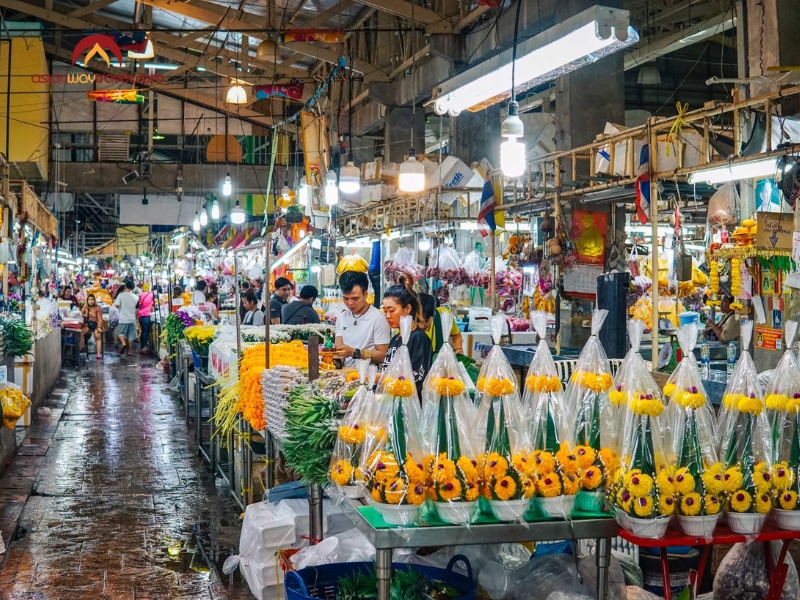
Pak Khlong Talat is Bangkok’s main flower market. Vendors sell orchids, roses, lotus flowers, garlands and decorative arrangements used in homes, temples and ceremonies.
The market shows the role flowers play in Thai religious customs and everyday life. It is also one of the city’s most colorful photography locations.
Visit early in the morning to see wholesale activity or in the evening when new deliveries arrive. The market can be combined with a riverside walk or a visit to nearby old-town attractions.
14. King Power Mahanakhon
King Power Mahanakhon represents modern Bangkok with its distinctive pixel-like exterior. The building includes an observation area offering wide views across the city.
the upper levels, visitors can see the contrast between historic temple districts, dense residential areas, business centers and the Chao Phraya River.
Sunset is the most popular time to visit, but visibility depends on weather and air conditions. Book ahead during busy travel periods.
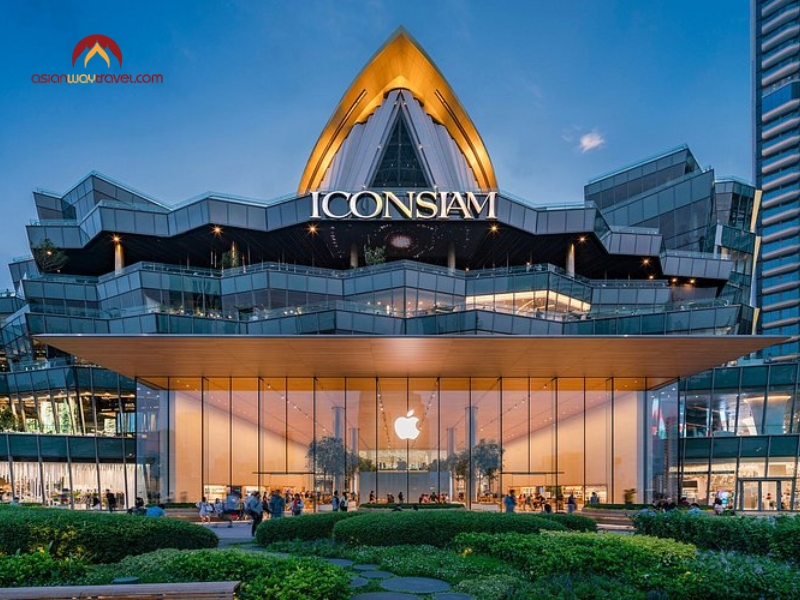
15. ICONSIAM and the Modern Riverside
ICONSIAM is a large shopping, dining and entertainment complex beside the Chao Phraya River. It provides a modern contrast to Bangkok’s historic temples and traditional markets.
Visitors can explore Thai products, restaurants, indoor market-style areas and riverside terraces. The location also offers convenient boat connections to other parts of the city.
ICONSIAM is suitable for families, shoppers and travelers looking for an easy evening stop after a day of cultural sightseeing.
See more: Thailand Tour
Practical Tips for Visiting Bangkok Landmarks
Bangkok is easy to explore when visitors account for temple rules, transport options, weather and realistic travel times. These considerations can prevent common delays and unnecessary discomfort.
- Dress appropriately for temples: Wear clothing that covers the shoulders and knees. Shoes must be removed before entering certain religious buildings.
- Begin sightseeing early: Mornings are generally cooler and less crowded, particularly around the Grand Palace, Wat Pho and Wat Arun.
- Use river transport: Ferries are useful for reaching major riverside landmarks and can be faster than road transport during busy periods.
- Check opening information: Temple access, admission fees and operating hours may change during ceremonies, holidays or official events.
- Avoid an overloaded itinerary: Three or four major landmarks per day are usually enough when travel time, meals and weather are considered.
Explore Bangkok with Asianway Travel
The main landmarks in Thailand, Bangkok become easier to explore when the itinerary considers location, opening times, transport and personal interests. A planned route also leaves enough time for local food, river travel and cultural experiences.
With more than 20 years of experience, Asianway Travel provides professional local planning and customizable Southeast Asia tours. Bangkok programs can be adjusted according to your schedule, budget, travel style and preferred level of comfort.
Contact Asianway Travel to create a private Bangkok itinerary combining royal landmarks, historic temples, riverside experiences and local neighborhoods in one practical travel plan.