
15 Must-Do Experiences in Laos for First-Time Visitors
Laos rewards travelers who slow down. Instead of rushing between crowded attractions, visitors can walk through temple-lined streets at dawn, follow the Mekong past small riverside villages, hike above limestone valleys, and explore archaeological sites that remain unfamiliar to many Southeast Asia travelers. This guide covers 15 must do in Laos experiences for first-time visitors, Luang Prabang and Vang Vieng to the Bolaven Plateau and the 4,000 Islands. Each recommendation explains where to go, what makes the experience worthwhile, and who it suits, helping you build a Laos itinerary around your time, interests, and preferred travel pace. Let's explore this further with AsianWay Travel in this article.
15 Must-Do Experiences in Laos Worth Adding to Your Trip
The best experiences in Laos combine living culture, mountain landscapes, ancient heritage, and the daily rhythm of the Mekong. You do not need to complete every activity in one trip. Choose the ones that fit your route and travel style.
Discover the Cultural Heart of Luang Prabang
Luang Prabang is more than a preserved old town. Buddhist traditions, riverside life, colonial-era buildings, and local markets remain closely connected, making the city one of the best places to understand Laos at a comfortable pace.
- Walk through Luang Prabang Old Town
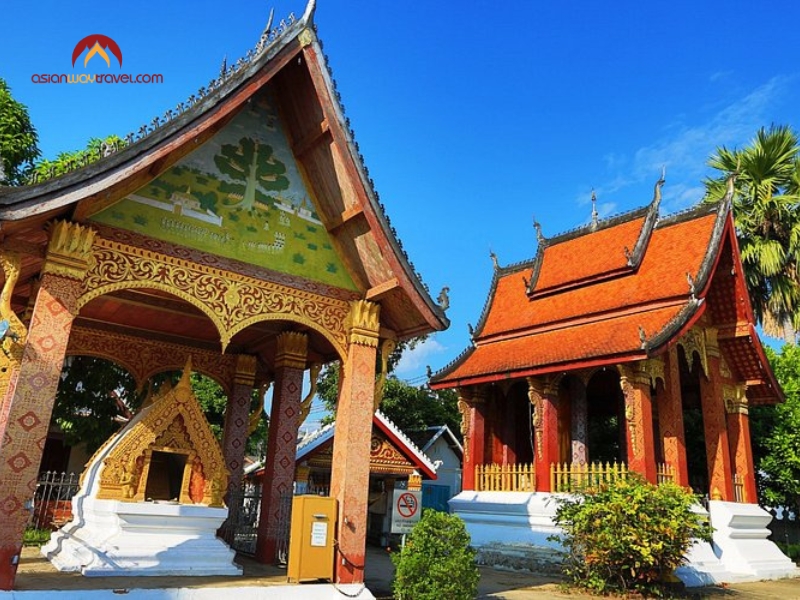
The historic center is compact enough to explore on foot, allowing you to notice details that are easy to miss a vehicle. Wooden Lao houses stand beside former colonial buildings, while temple roofs appear between cafés, guesthouses, and family-run shops.
Start near the Royal Palace Museum, continue toward Wat Xieng Thong, and follow the quieter lanes between the Mekong and Nam Khan rivers. Early morning and late afternoon are the best times to walk, when the air is cooler and the streets are less busy.
- Observe the morning alms-giving ceremony respectfully
Before sunrise, lines of monks in saffron robes move quietly through the streets to receive food local residents. The soft footsteps, low voices, and morning light create a calm scene, but this is a religious practice rather than a staged performance.
Visitors should stand at a respectful distance, avoid flash photography, and never block the monks’ route. Those who wish to participate should arrange it through a responsible local guide who can explain the correct behavior and cultural meaning.
See more: Northern Vietnam Tour: Hanoi – Ha Long Bay – Sapa – Ha Giang – Ninh Binh
- Visit Kuang Si Waterfall
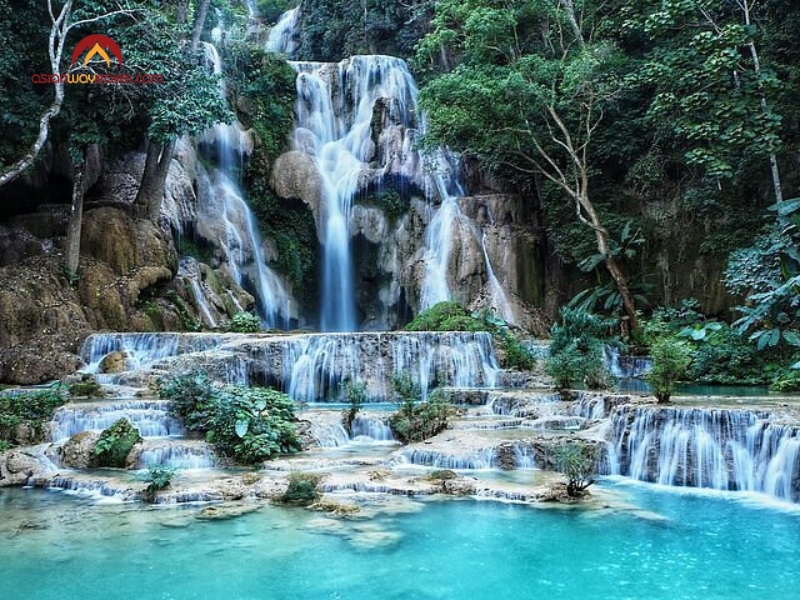
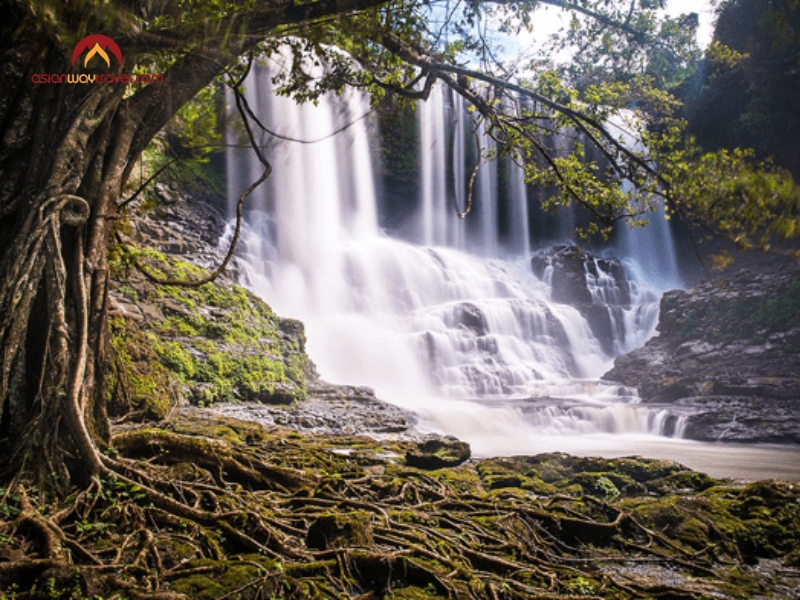
Kuang Si is not a single vertical waterfall. Water flows through a series of limestone pools, creating multiple turquoise levels beneath dense forest. Wooden paths connect the main viewing areas, while selected pools allow swimming when conditions are suitable.
Arrive early to enjoy quieter trails and clearer views. The combination of shaded forest, cool water, and layered cascades makes Kuang Si different many roadside waterfalls elsewhere in the region.
Experience the Mekong and Northern Laos Landscapes
Northern Laos is shaped by rivers, steep valleys, and small settlements separated by mountain roads. Traveling through this region is slower, but the journey reveals landscapes and communities that cannot be understood through short city visits.
- Cruise the Mekong to Pak Ou Caves
The boat ride Luang Prabang is an essential part of the experience. Long wooden boats pass forested banks, fishing areas, vegetable gardens, and villages where daily life remains closely connected to the river.
Pak Ou consists of two caves containing thousands of Buddha images placed there over generations. The lower cave is easier to access, while the upper cave requires a longer climb and is darker inside. Bring a flashlight if you plan to explore both.
- Hike or cruise around Nong Khiaw
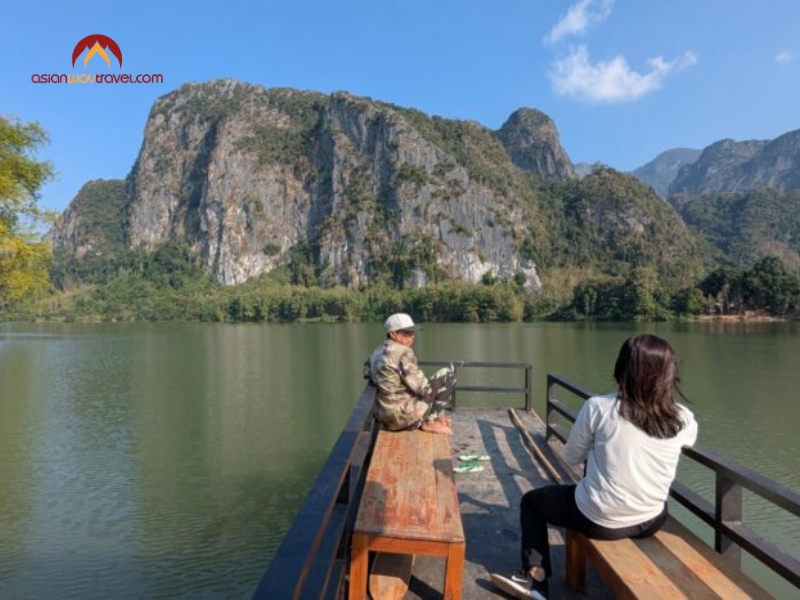
Nong Khiaw sits beside the Nam Ou River, surrounded by steep limestone mountains. Unlike Vang Vieng, which has a wider range of developed adventure activities, Nong Khiaw offers a quieter base for hiking, river journeys, and village visits.
The main viewpoints require a steep climb, but the reward is a broad view over the river, fields, and surrounding peaks. Travelers who prefer a gentler activity can take a boat upstream and enjoy the same landscape water level.
- Spend time in a local village
A responsible village visit should provide context rather than turn local life a quick photo stop. The most meaningful experiences are usually guided by local residents and focus on farming, weaving, food preparation, or regional traditions.
Choose small-group or private visits where the community has a direct role in the activity. A knowledgeable guide can help with communication and explain social customs, making the interaction more respectful and informative for both visitors and residents.
Explore Vang Vieng Beyond Its Adventure Image
Vang Vieng is known for outdoor activities, but its real appeal comes the surrounding limestone formations, rice fields, caves, and the Nam Song River. The key is to choose a manageable number of activities rather than filling one day with rushed stops.
- Kayak or take a boat on the Nam Song River
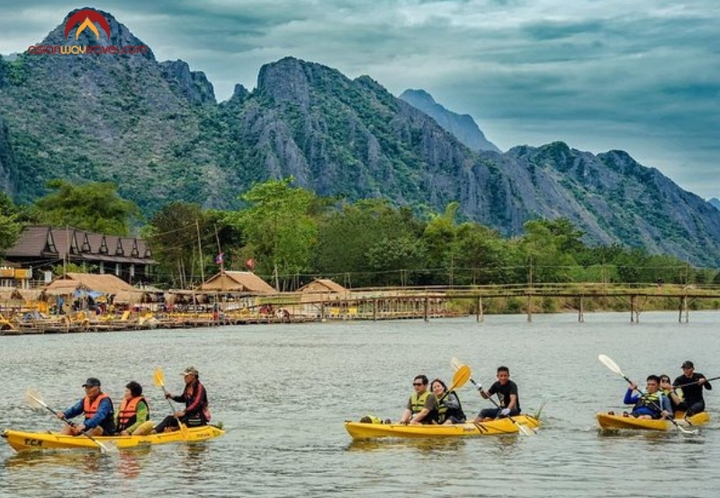
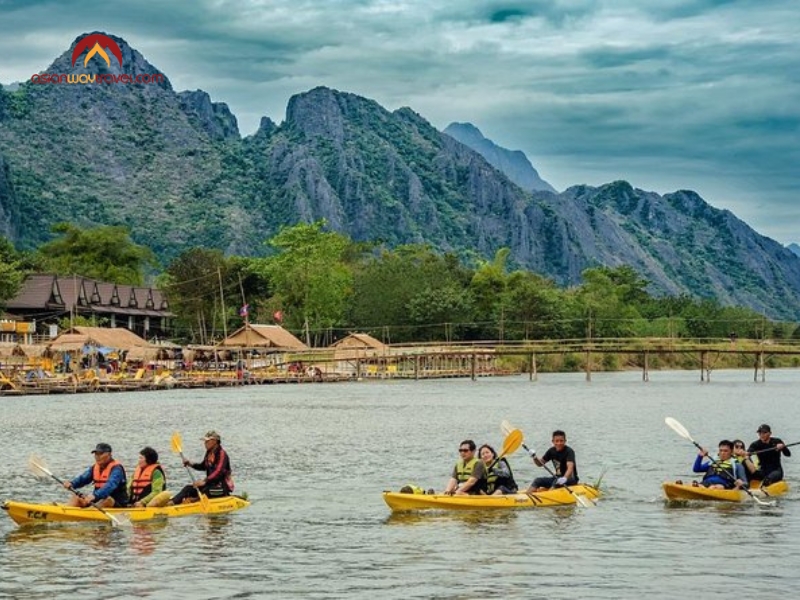
the river, Vang Vieng’s limestone cliffs rise directly behind fields and villages. Kayaking offers more activity, while a small boat ride suits travelers who prefer to focus on the scenery.
Late afternoon is especially attractive as the light softens across the valley. During the wetter months, currents may be stronger, so travelers should use established operators with suitable safety equipment and local knowledge.
- Climb to a Vang Vieng viewpoint
Viewpoints such as Nam Xay provide a clear sense of the region’s scale. the top, sharp limestone peaks extend across farmland, dirt roads, and small settlements.
The climbs can be steep, uneven, and slippery after rain. Wear shoes with reliable grip, carry water, and avoid starting too close to sunset. Travelers with limited mobility may prefer riverside routes or lower viewpoints.
- Explore a cave or natural lagoon
Vang Vieng has numerous caves and swimming areas, but visiting several in one day often means spending more time on rough roads than enjoying each site. one cave and one lagoon based on current conditions.
Some caves require headlamps, guides, or short climbs. Water levels and road access can change with the season, so local advice is more useful than following an old online itinerary without adjustment.
Understand Laos Through Its History and Heritage
Laos has a deeper historical range than many first-time visitors expect. Prehistoric stone sites, Khmer-era temple complexes, Buddhist monuments, and reminders of modern conflict reveal different stages of the country’s development.
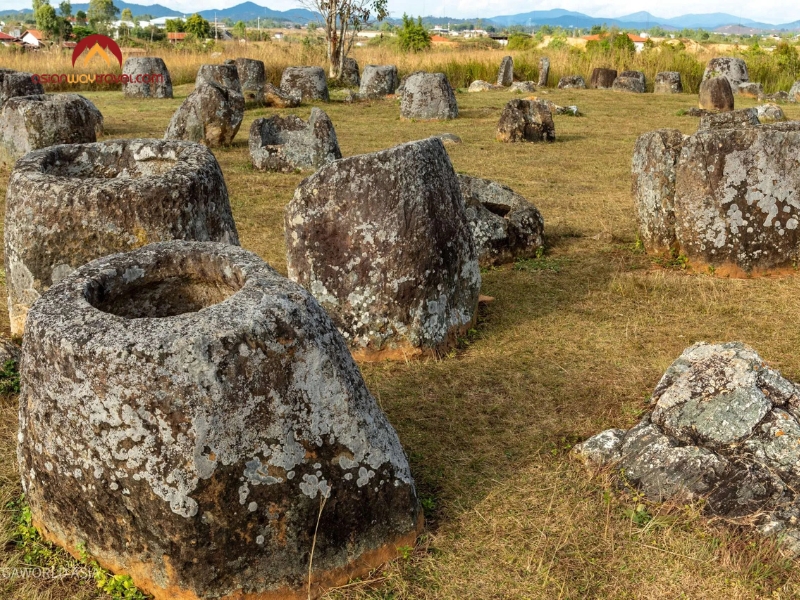
- Explore the Plain of Jars
Across the Xieng Khouang Plateau, large stone jars stand in fields and on hillsides. Their exact purpose remains debated, although archaeological research links them to ancient funerary practices.
The landscape feels very different Laos’ temple towns and river valleys. Visitors should remain on marked paths because unexploded ordnance remains a serious issue in parts of the province. A guide adds valuable context about both the archaeological sites and the region’s modern history.
- Visit Vientiane’s key religious landmarks
Vientiane is quieter than most Southeast Asian capitals, making it suitable for a short cultural stop rather than an intensive sightseeing schedule. Pha That Luang, Wat Sisaket, and Haw Phra Kaew are among the city’s most important landmarks.
Wat Sisaket is particularly valuable for its cloister walls filled with small Buddha images. In the evening, the Mekong riverfront becomes a local gathering place, with food stalls, walkers, and families enjoying the cooler air.
- Walk through Vat Phou in Champasak
Vat Phou is arranged along a natural slope, with the complex rising the plains toward the mountain. Stone paths, terraces, reservoirs, and sanctuary remains demonstrate how Khmer builders connected architecture with the surrounding landscape.
The climb is gradual but exposed, so morning visits are more comfortable. the upper levels, visitors can look back across the plains toward the Mekong, making the site rewarding for both historical interest and landscape views.
Slow Down in Southern Laos
Southern Laos has fewer major urban centers and suits travelers who prefer waterfalls, coffee farms, river islands, and a slower schedule. It is particularly worthwhile for visitors with at least ten days in the country.
- Follow the Bolaven Plateau waterfall and coffee route
The Bolaven Plateau has a cooler climate and fertile volcanic soil, supporting some of Laos’ best-known coffee-growing areas. Travelers can visit farms to learn how beans are grown, processed, roasted, and prepared.
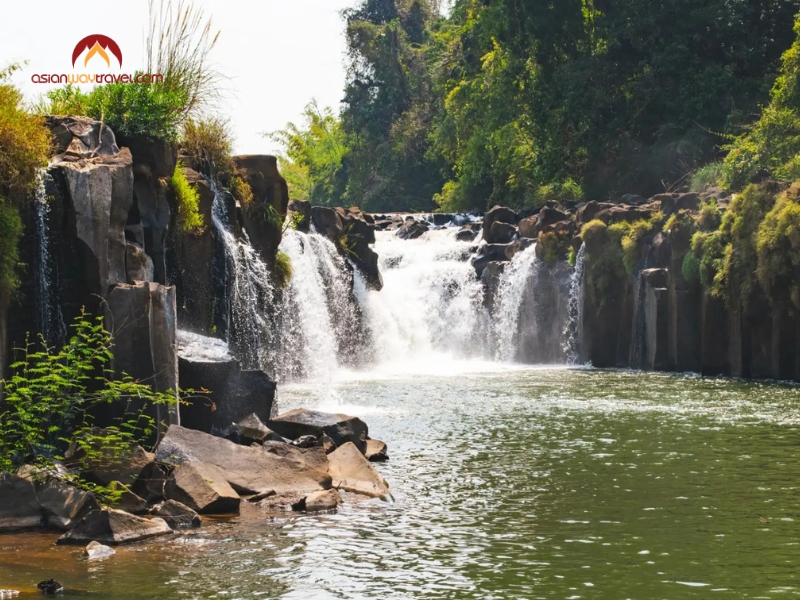
Waterfalls such as Tad Fane and Tad Yuang are located along popular plateau routes. Tad Fane drops a deep forested gorge, while Tad Yuang offers closer access to the water and surrounding paths. A private vehicle provides greater flexibility than trying to cover the area through limited public transport.
See more: Lao Tour
- Stay on one of the 4,000 Islands
In southern Laos, the Mekong widens around numerous islands and sandbanks. Don Khone and Don Det are the most common bases, but they offer different atmospheres. Don Det has more budget accommodation and social venues, while Don Khone generally feels quieter.
Cycling is one of the easiest ways to explore. Narrow roads pass wooden houses, fields, small temples, and riverside viewpoints. At sunset, boats move slowly across the water as cooking smoke rises homes along the banks.
- See the Mekong’s southern waterfalls
Khone Phapheng and Li Phi show the force of the Mekong rather than the calm river scenery seen farther north. Water breaks across rocks, channels, and broad drops, creating a loud and powerful landscape.
Khone Phapheng is easier to access and has established viewing areas. Li Phi is commonly visited Don Khone and fits naturally an island stay. Both help explain why this part of the Mekong historically presented major challenges for river navigation.
How Many Days Do You Need in Laos?
The right trip length depends on how widely you want to travel. Roads through mountainous regions can be slow, while domestic flights do not connect every destination directly.
|
Trip length |
Suggested route |
Main experiences |
|
4–5 days |
Luang Prabang |
Old Town, Kuang Si, Mekong cruise, Pak Ou |
|
7–8 days |
Luang Prabang – Vang Vieng – Vientiane |
Culture, waterfalls, karst scenery, temples |
|
10–12 days |
Northern Laos and southern Laos |
Add Vat Phou and Bolaven Plateau |
|
13–15 days |
Broader Laos journey |
Add Plain of Jars and 4,000 Islands |
Plan Your Must-Do Laos Experiences With Asianway Travel
The best must do in Laos itinerary does not need to include every famous place. A well-designed journey should balance temples, rivers, mountain scenery, historical sites, and enough free time to experience the country without constant transfers.
With more than 20 years of regional travel experience, Asianway Travel can design a private Laos itinerary around your schedule, interests, preferred hotel category, and travel pace. Our local knowledge also helps connect major highlights with smaller cultural and natural experiences that are easy to miss when planning independently.
Explore our Laos tours or contact Asianway Travel to receive a tailored itinerary and travel proposal.