
10 Best Things to Do in Da Nang for First-Time Visitors

Da Nang combines a long urban beach, forested mountains, Cham heritage and an active riverside centre within a relatively compact area. For first-time visitors, the challenge is not finding attractions but deciding which experiences deserve limited holiday time. The best things to do in Da Nang range watching fishing boats return at sunrise to entering cave pagodas, tasting central Vietnamese dishes and crossing one of the country’s most dramatic mountain passes. This guide AsianWay Travel selects ten experiences that reveal different sides of the city while helping you plan a practical first visit.
10 Best Things to Do in Da Nang on Your First Trip
These ten experiences cover Da Nang’s beaches, natural landscapes, cultural sites, local food and nearby destinations. You do not need to complete them all; choose according to your interests and available time.
.png)
1. Start the Day at My Khe Beach
My Khe Beach is easy to reach the city centre, making it a practical place to experience Da Nang’s coastline without planning a separate excursion. The beach is most atmospheric early in the morning, before the midday heat arrives.
Fishing boats sit offshore while residents swim, jog and exercise on the sand. Vendors begin arranging drinks and snacks as the beachfront roads gradually become busier. This daily routine shows why the coast is part of local life rather than simply a resort backdrop.
Return in the late afternoon for another swim or a walk along the shore. Avoid the strongest midday sun, and follow local safety flags when entering the water.
.png)
See more: Vietnam Itinerary 5 Days: A Northern Vietnam Route Through Hanoi, Sapa and Halong Bay
2. Explore the Caves and Pagodas of the Marble Mountains
The Marble Mountains combine limestone caves, Buddhist sanctuaries, stone stairways and viewpoints within one compact site south of central Da Nang. This mixture makes the complex more rewarding than a standard scenic lookout.
Inside the caves, shafts of sunlight fall through openings in the rock and illuminate altars surrounded by incense smoke. Steps lead between pagodas, carved gateways and viewpoints overlooking the coast and surrounding neighbourhoods.
Visit early to avoid heat and larger groups. Some staircases are steep and uneven, so comfortable shoes are important. Travellers with limited mobility can use the lift for part of the ascent, although several interior sections still require walking.
.png)
3. Discover the Natural Side of Son Tra Peninsula
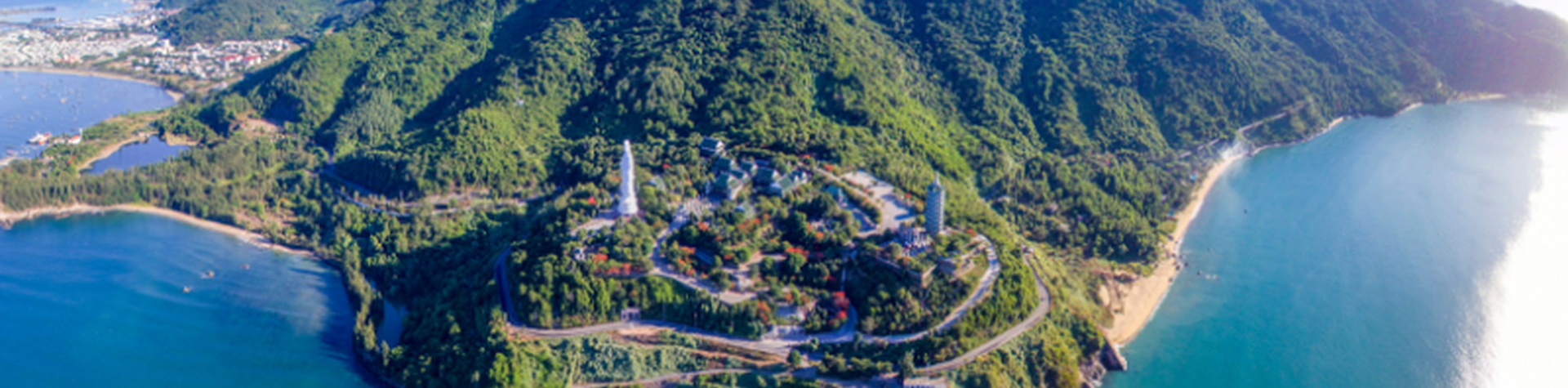
Son Tra Peninsula rises directly Da Nang’s coastline, offering forest roads, sea views and a quieter atmosphere within a short drive of the city. It is one of the best places to understand how closely Da Nang connects urban development with nature.
Begin at Linh Ung Pagoda, where the large Lady Buddha statue overlooks the coast. Continue along permitted routes through dense forest, stopping at viewpoints where the city, beach and sea appear in a single panorama.
Son Tra is also home to the rare red-shanked douc langur. Sightings are never guaranteed, and visitors should avoid feeding wildlife or approaching animals. A private car with an experienced local driver is safer than riding unfamiliar mountain roads independently.
.png)
4. Learn About Cham Culture at the Museum of Cham Sculpture
The Museum of Cham Sculpture provides valuable context for the temples, carvings and archaeological sites found across Central Vietnam. It is particularly useful before visiting My Son Sanctuary or other former centres of the Champa civilisation.
The museum displays sandstone sculptures of Hindu deities, sacred animals and decorative figures recovered sites across the region. Looking closely at the carvings reveals changes in artistic style and religious influence over several centuries.
This is a suitable activity during the hottest part of the day or in wet weather. Allow at least one hour rather than walking through quickly. Afterward, continue towards the Han River and explore the nearby riverside area on foot.
.png)
5. Watch Da Nang Light Up Around Dragon Bridge
Dragon Bridge is both a major river crossing and one of Da Nang’s most recognisable modern landmarks. Its yellow steel structure is shaped like a dragon stretching across the Han River, linking the city centre with the beach districts.
Visit after sunset when the bridge, surrounding buildings and riverside paths are illuminated. Motorbikes stream across the bridge while sightseeing boats move below, reflecting coloured lights on the water.
Fire and water performances are organised on selected evenings, but schedules can change during festivals or special events. Check locally before visiting. Arrive early if a performance is planned and avoid standing directly in front of the dragon’s head unless you are prepared to get wet.
.png)
6. Taste Da Nang’s Local Specialities
Da Nang’s food reflects the stronger seasoning, fresh herbs and practical eating culture of Central Vietnam. Exploring local dishes is one of the most direct ways to understand the city beyond its major attractions.
Start with mi Quang, a turmeric-coloured noodle dish served with herbs, peanuts, rice crackers and a small amount of rich broth. Other useful choices include bun cha ca with fish cake, banh xeo pancakes, pork wrapped in rice paper and freshly grilled seafood.
Choose a busy local restaurant where ingredients are prepared continuously. A guided food tour can help first-time visitors understand condiments, ordering habits and the differences between dishes that may appear similar on an English menu.
.png)
7. Browse Han Market or Con Market
Da Nang’s central markets offer two different experiences. Han Market is easier for visitors buying dried seafood, coffee, snacks, fabric and packaged souvenirs. Con Market is more rewarding for travellers interested in prepared food and everyday local activity.
At Con Market, narrow food sections fill with the sounds of metal bowls, conversations and sizzling pans. Stalls serve noodles, rice dishes, sweet soups, avocado desserts and small snacks at close quarters.
Carry small amounts of cash and ask the price before ordering. Visit outside the busiest lunchtime period if you prefer more space. Rather than purchasing immediately, walk through once to compare products, food stalls and prices.
.png)
See more: Vietnam Tour
8. Take a Day Trip to Ba Na Hills and the Golden Bridge
Ba Na Hills is a large mountain entertainment complex rather than a traditional cultural destination. It suits families, photographers and travellers interested in cable-car views, landscaped gardens and themed attractions.
The best-known feature is the Golden Bridge, a curved pedestrian walkway appearing to rest in two giant stone hands. Cloud and mist can move quickly across the mountains, changing the view within minutes.
Plan most of a day for the excursion because the complex includes several separate areas connected by cable cars and walkways. Arriving early may provide more time before the busiest period. Check the weather forecast, ticket conditions and operating information before departure, as visibility and attraction access can change.
.png)
9. Visit Hoi An in the Late Afternoon
Hoi An lies close enough to Da Nang for an afternoon and evening excursion. The combination works well because visitors can spend the morning at the beach or Marble Mountains before continuing south to the ancient town.
Arrive while daylight still reveals the ochre shop houses, tiled roofs and narrow lanes. As evening approaches, lanterns appear outside restaurants and workshops, while small boats move along the Thu Bon River.
Hoi An becomes crowded after sunset, so explore quieter streets before the main evening groups arrive. Do not combine the visit with too many other attractions. Allow enough time to walk slowly, eat dinner and see the town in both daylight and evening conditions.
.png)
10. Cross the Hai Van Pass
Hai Van Pass connects Da Nang with the landscapes north towards Hue. The road climbs between forested mountains and the sea, opening towards beaches, railway lines and the waters of Lang Co Lagoon.
The value of this experience comes the journey rather than a single attraction. At different bends, clouds gather around the upper slopes while sunlight reaches the coastline below. Old fortifications at the summit provide a natural stopping point.
Travelling by private car allows you to stop safely and continue towards Lang Co or Hue. Motorbike travel is better suited to experienced riders who understand local road conditions. Weather can change quickly, so avoid crossing during heavy rain or poor visibility.
.png)
How to Choose the Right Da Nang Experiences
The right activities depend on whether you want beach time, cultural context, local food or a broader Central Vietnam journey.
|
Travel interest |
Recommended experiences |
Suggested time |
|
Beach and relaxation |
My Khe Beach |
Half day |
|
Nature and viewpoints |
Son Tra Peninsula, Hai Van Pass |
Half or full day |
|
Culture and history |
Marble Mountains, Cham Museum |
Half day |
|
Local food and daily life |
Con Market, local food tour |
2–4 hours |
|
Family entertainment |
Ba Na Hills |
Full day |
|
Nearby heritage |
Hoi An |
Half day or evening |
.png)
Plan Your First Da Nang Trip with Asianway Travel
The best things to do in Da Nang depend on your available time, travel pace and plans for Hoi An, Hue or other destinations in Central Vietnam. A successful itinerary should combine major landmarks with enough time for beaches, food and local neighbourhoods.
Planning your first Da Nang visit but unsure how to connect the coast, cultural sites and nearby heritage towns? With more than 20 years of destination experience, Asianway Travel designs private and customisable journeys based on your interests, schedule and preferred pace. Explore our Vietnam tours or speak with our local specialists to start planning your Central Vietnam itinerary.